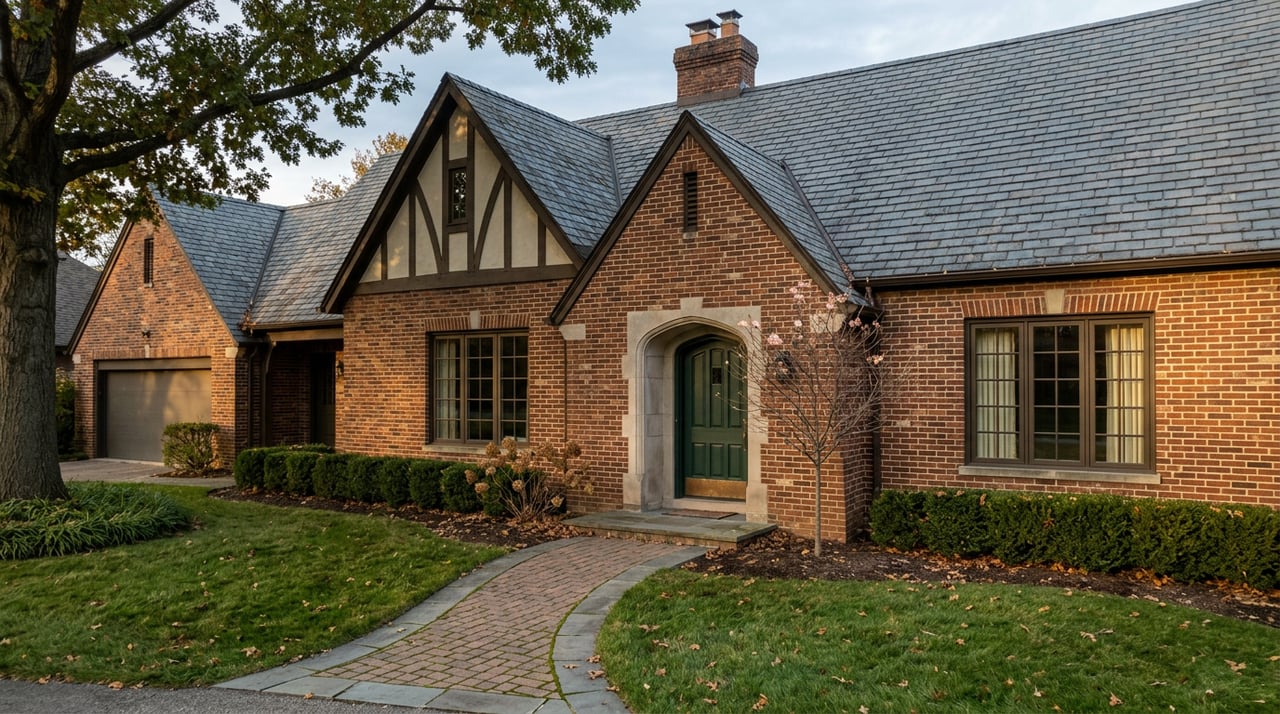
Say you're under contract on a Shaker Heights Tudor with a punch list of code violations from the city's inspection. You've agreed to assume the repairs. The seller deposits money into an escrow account to cover them. Whose name is on that account?
Until last year, it was the seller's. Today, it's yours. That single change, buried in a municipal ordinance most buyers never read, rewrites who can realistically compete for a Shaker Heights home that needs work.
What actually changed, and when
Shaker Heights has required a city Point-of-Sale inspection before any residential sale for decades. What's new is who controls the money when that inspection turns up violations. On April 28, 2025, City Council passed Ordinance 25-53, amending Chapter 1415 of the Housing Code. The change took effect May 28, 2025, and Building & Housing Director Kyle Krewson called it the first major overhaul to point of sale in more than 20 years.
Three provisions matter most for anyone transacting in the city right now. Escrow accounts are now established in the buyer's name rather than the seller's. The threshold for requesting a partial disbursement dropped from $5,000 to $2,000, so buyers doing phased repairs don't have to wait until the whole punch list is done to get reimbursed. And the Certificate of Compliance, which used to expire 12 months after issuance, now runs 24 months from the date of the original inspection, a change the city applied retroactively to any certificate issued within the prior two years.
None of this is buried in fine print. It's on the city's own Point of Sale Procedure page, and it's the kind of detail a listing agent should be walking sellers through before a home ever hits the market, not after an offer comes in.
Why moving the money matters more than it sounds like it should
Here's the mechanism worth sitting with. Before the escrow money can be spent, the buyer generally has to pay a contractor out of pocket, then request reimbursement from the account, a process the city says can take up to 21 business days per disbursement, with a $15 fee per check issued. That was already true before the ordinance changed. What changed is whose balance sheet absorbs the float.
When the seller held the account, the buyer at least had a passive stake in someone else's money sitting there. Now the buyer is the account holder, which means the buyer needs enough liquidity to front repair costs and carry the escrow deposit simultaneously, on top of a down payment and closing costs. That's not a paperwork detail. It's a cash-flow test that some financing-stretched buyers simply won't pass, particularly on Shaker Heights' older housing stock, where a single POS violation list on a home built in the 1920s or 1930s can run well past cosmetic fixes.
The city's own numbers suggest most sellers still avoid this altogether. Building & Housing reports that violations get corrected before transfer in more than 70 percent of cases, meaning the seller fixes the problem and hands over a clean Certificate of Compliance rather than pushing repairs into escrow. The buyer-held escrow rule matters most in the remaining slice of deals, the ones where a seller can't or won't complete repairs before closing, and that slice tends to concentrate in exactly the properties where costs run highest: aging systems, deferred maintenance, estate sales from long-time owners who never got around to the roof or the knob-and-tube wiring.
What this looks like for sellers listing right now
Because the application has to go in before a seller can sign a contract, not before closing, timing is the seller's real lever here. The city recommends starting the process before listing at all, and advises allowing at least two weeks from application, stretching to three or four weeks during the busy spring season. A seller who waits until they have an accepted offer to schedule the inspection is already behind, and now risks handing a buyer both a delayed timeline and an account they have to personally fund.
The upside for sellers who get ahead of it: a clean Certificate of Compliance is now valid for two full years, not one. If you're testing the market, doing pre-listing repairs, or timing a sale around a life event, that extra 12 months of runway is real, and it's a direct result of the 2025 change.
How this compares once you cross the city line
The reason this is worth understanding before you write an offer, not after, is that Shaker Heights is not the regional default. Beachwood, Berea, Aurora, and Chagrin Falls don't require a point-of-sale inspection at all before a home changes hands. Cleveland Heights and University Heights, Shaker's closest neighbors, both require interior and exterior inspections much like Shaker does, though the escrow mechanics and fee schedules differ city by city.
That means two houses listed at the same price on opposite sides of a municipal boundary can carry completely different closing timelines and cash requirements. A buyer comparing a Shaker Heights listing against one a few blocks away in Beachwood isn't just comparing square footage and schools. They're comparing whether they'll need city-approved contractor estimates, a funded escrow account in their own name, and a two-to-four-week inspection window before they can even get to a signed contract.
The process is still being rebuilt
This isn't a one-time fix the city made and moved on from. In an April 2026 interview with the Cleveland Jewish News, Krewson described the escrow change as the first phase of a broader, multi-year modernization effort that includes digitizing inspections, equipping field inspectors with tablets, and building a clearer standardized framework for how violations get classified. The city also launched a Certificate of Compliance lookup tool through its CitizenServe portal in May 2025, letting buyers' agents and title companies verify a property's status without an account or login, though it only covers certificates issued on or after that date.
The practical takeaway is that whatever a blog post, including this one, says about Shaker Heights point-of-sale rules today may not describe the process a year from now. If you're far enough along to be scheduling an inspection, the city's own Point of Sale Procedure page is the source to check on the day you apply, not a guide written months earlier.
A few questions this raises
Does the point-of-sale requirement apply to a cash sale or a sale between family members? Yes, with narrow exceptions. The city requires POS compliance for any transfer of improved residential real estate, including land installment contracts. Straight gifts, like an inherited property transferred with no money changing hands, are generally treated differently, but even a sheriff's sale or auction purchase triggers a 30-day window to obtain a Point of Sale inspection after transfer.
What happens if I decide not to sell after the inspection finds violations? You still have to fix them. Once the city identifies code violations during a Point of Sale inspection, those items must be corrected within 90 days regardless of whether the sale goes through. Pulling a listing doesn't erase the inspection report.
Can a buyer avoid setting up escrow entirely? Only if all violations are corrected before the transfer. The other route the city allows is substituting a purchase-rehabilitation loan, such as a HUD 203(k), for the escrow deposit, provided the buyer intends to live in the home and the lender terms meet the city's criteria. That's worth raising with your lender early if you're eyeing a home with a longer violation list.
If you're weighing a Shaker Heights purchase against a similar listing in a neighboring suburb, or you're a longtime owner trying to time a sale around this two-year certificate window, it helps to talk through the specifics before you're already under a deadline. Heather Srodek has spent nearly two decades guiding Greater Cleveland buyers and sellers through exactly this kind of local detail. Let's Connect.
